JP patent application 2026-067434
No alarm on mornings you're already up.
Problem & Solution

The alarm goes off and your morning gets noisy even though you're already awake.
Unnecessary alarms add stress to your day.

Smarra detects when you've woken up and automatically skips the next alarm.
It eliminates unnecessary alarms and delivers a quiet morning.
What makes it amazing
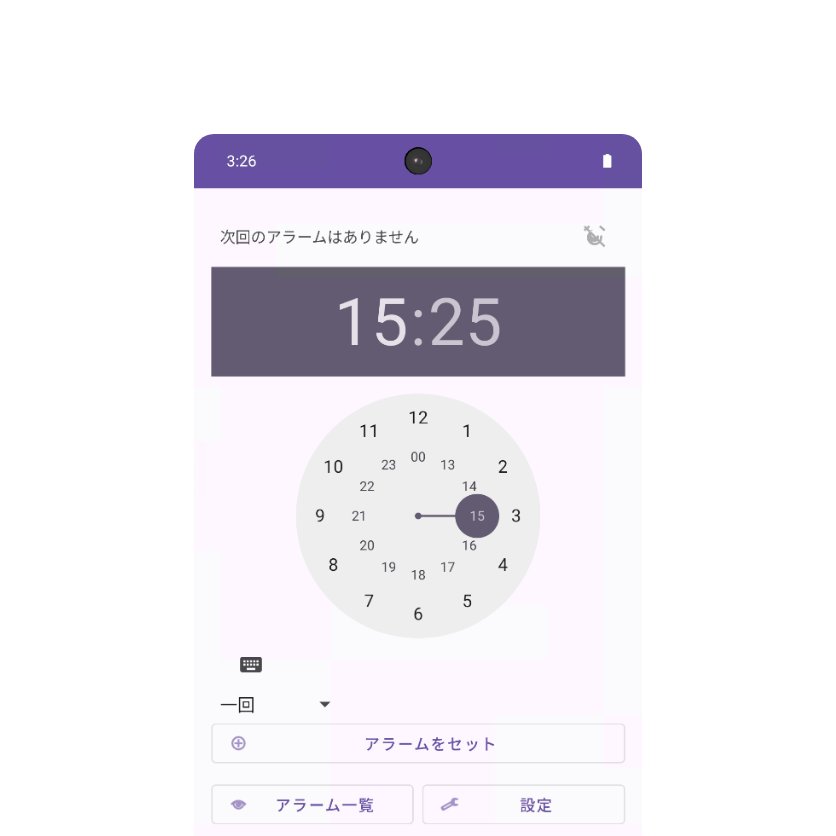
Auto-skip via wake detection
Determines that you're awake from multiple sensor signals,
then automatically skips the next alarm.
Battery-friendly design
Achieves low-power monitoring using the significant motion sensor and similar techniques.
Flexible customization
Freely toggle each detector on or off and tune sensitivity and start timing.
Standard alarm features
Comes with all the basics too: repeat schedules, snooze, and dismiss-from-notification.
How does it stop the alarm so smartly?
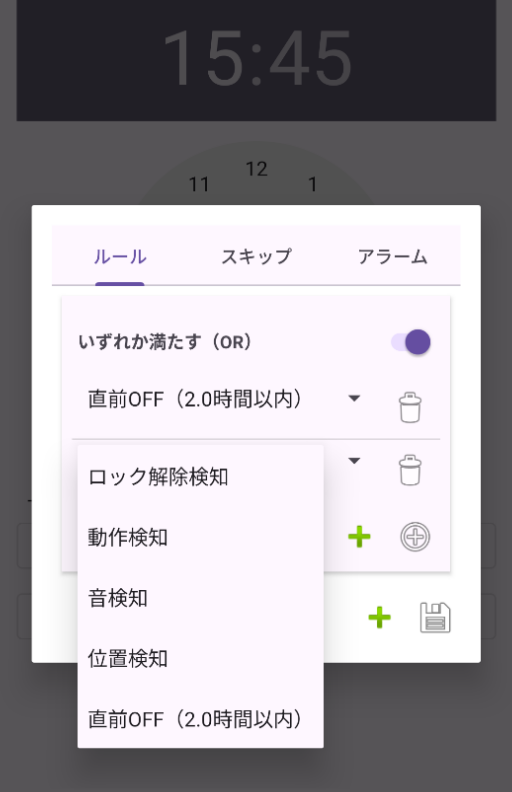
Unlock detection
Unlocking the screen skips the most recent alarm.
Motion detection
Detects significant movement via the significant motion or accelerometer sensors.
Sound detection
If volume exceeds a threshold, you're considered awake.
Location detection
Detects movement of 50 m or more.
Settings & customization
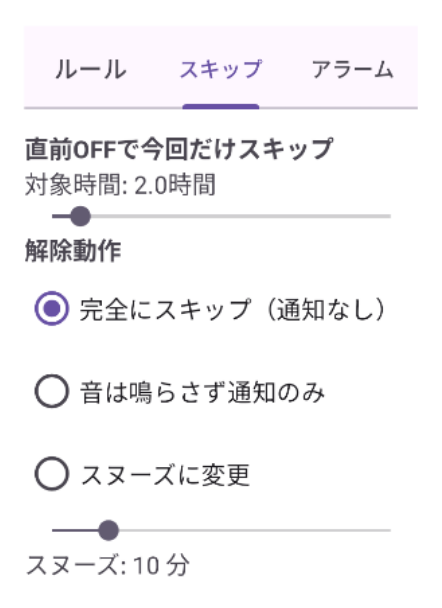
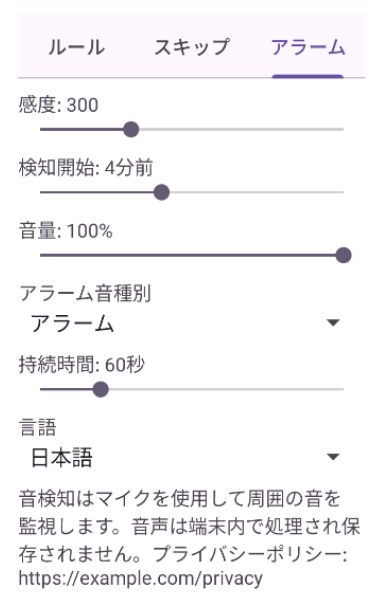
- Toggle each detector on/off and tune sensitivity, start-minutes-before, and volume/duration
- Use the just-before OFF window to reliably "skip only the next one"
- Switch the language instantly between Japanese, English, and Chinese
Technical design & power efficiency
Low-power sensors
Prefers TYPE_SIGNIFICANT_MOTION and only falls back to the accelerometer on unsupported devices.
The Pre-Alarm service runs only a few minutes before each alarm and uses WorkManager to minimize battery load.
Permissions & review compliance
Conforms to the latest Android constraints, including SCHEDULE_EXACT_ALARM declarations and foreground service type specifications.
Review-sensitive permissions such as audio recording and location are explained on screen along with their purpose.
Privacy
Audio analysis runs entirely on-device, and recorded audio data is not stored.
No data is sent externally unless the user explicitly opts in.